

- Self-pickup
- Courier delivery (Free)
- Delivery across Russia and CIS countries (Free)
- Cash on delivery
- Bank transfer
- Card transfer
We deliver books across Moscow and the Russian regions
Custom bookbinding and production starting from 3 days
Russian and German espionage before and during the 1914–1918 war
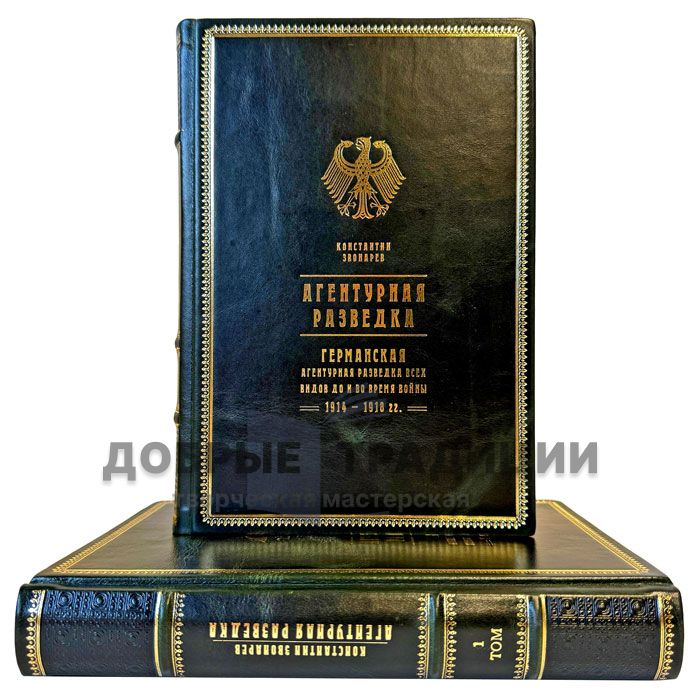
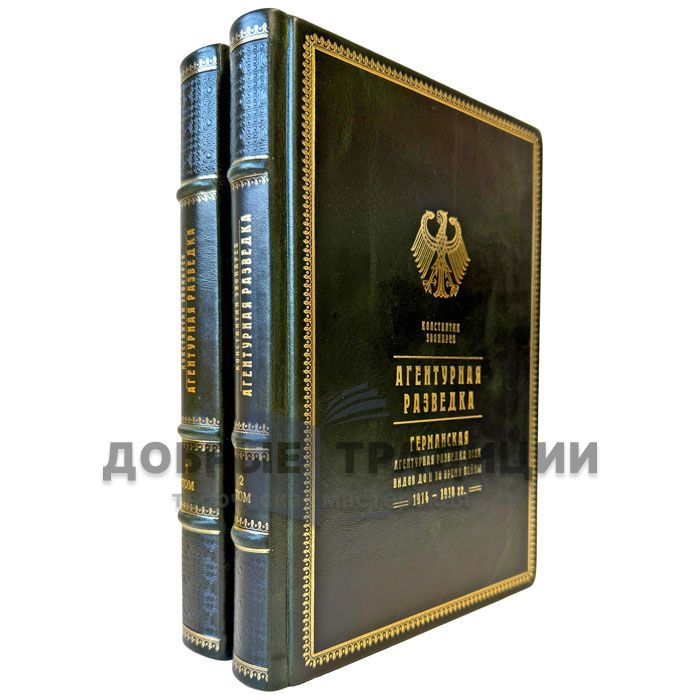
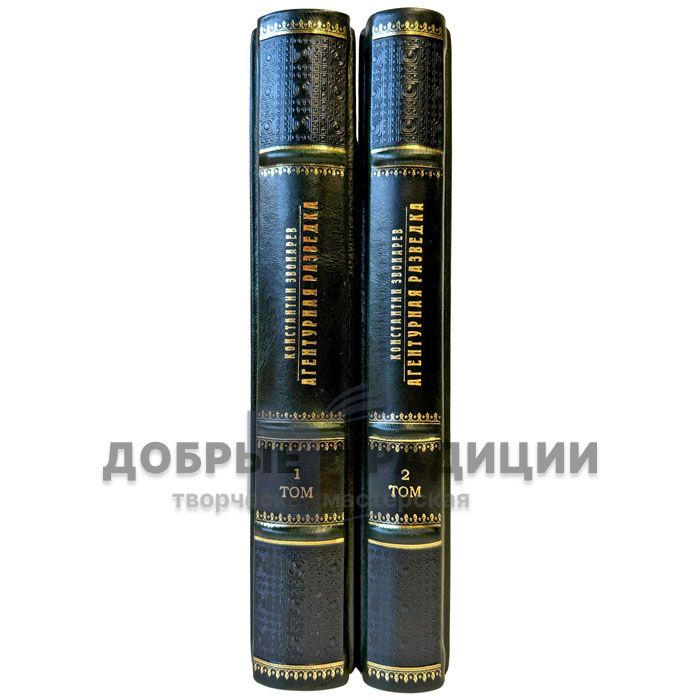
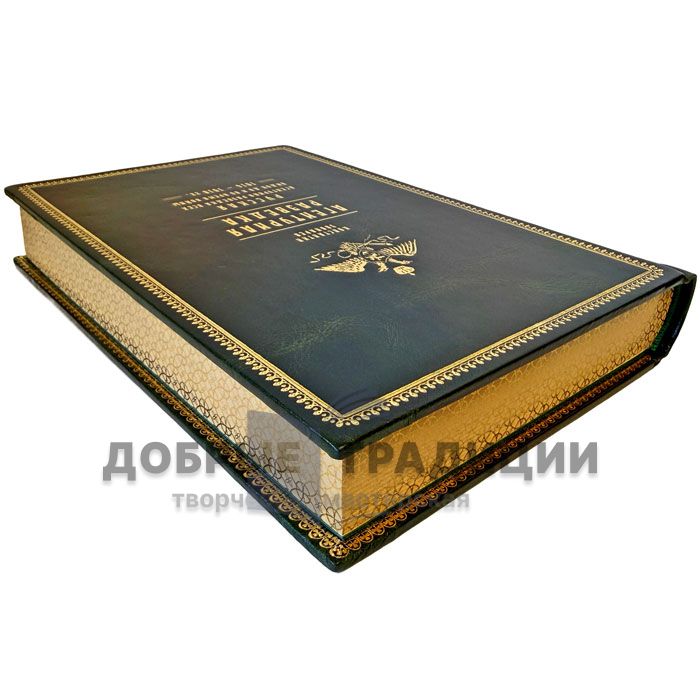
Konstantin Zvonarev - Secret intelligence in 2 volumes. Leather-bound gift books.
Konstantin Zvonarev's two—volume book "Secret Intelligence" is an educational and historical manual about the work of the secret services of Russia and Germany at the beginning of the 20th century.
The book was written in the 1920s by order of the Red Army Intelligence Directorate. For a long time it was classified and was classified "For official purposes." The author (real name Karl Zygzne) studied the secret archives and questioned participants in real espionage operations.
Content:
Volume 1. Russian secret intelligence of all kinds before and during the war of 1914-1918.
The first book is entirely devoted to the espionage of the Russian Empire. The author describes in detail the period from 1901 to 1918.
- The system of work: how espionage was organized in tsarist Russia, who ran it, and how responsibilities were distributed.
- Military attaches: the role of official diplomats in collecting classified data.
- Secret agents: how spies were searched, recruited, and trained.
- Police and Counterintelligence: how the Police Department fought against foreign spies inside the country.
- Experience of wars: how intelligence proved itself in the Russian-Japanese and First World Wars.
Volume 2. German secret intelligence of all kinds before and during the war of 1914-1918.
The second book examines the structure of the Imperial German spy network before and during the First World War.
- Organization of the network: the structure of the German special services and their budgets.
- Working methods: how the Germans recruited people in other countries and passed on secret codes.
- Directions: where exactly Germany was spying on and what data her generals were most interested in.