

- Self-pickup
- Courier delivery (Free)
- Delivery across Russia and CIS countries (Free)
- Cash on delivery
- Bank transfer
- Card transfer
We deliver books across Moscow and the Russian regions
Custom bookbinding and production starting from 3 days
A historical narrative enriched by extracts from manuscripts now lost
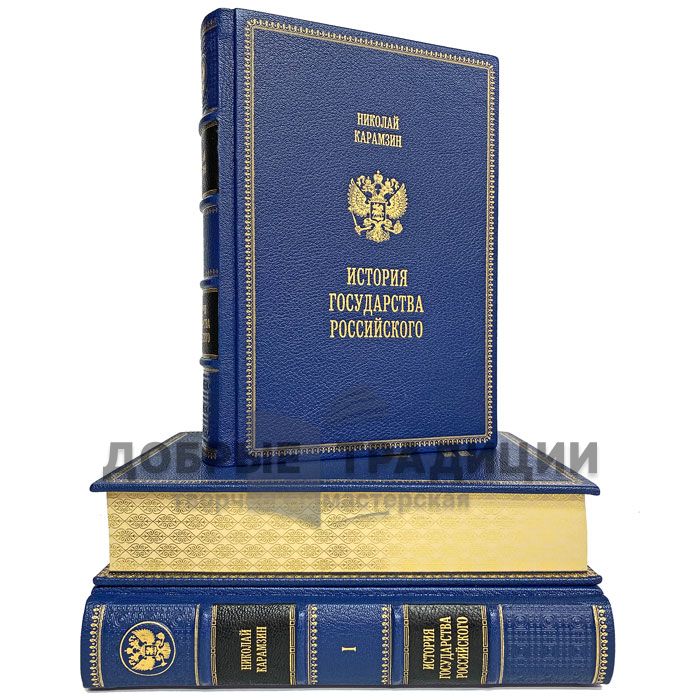
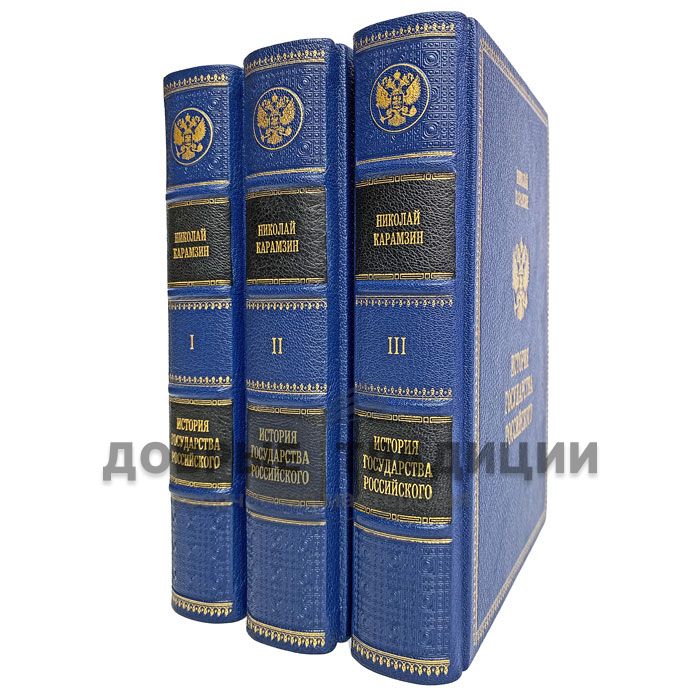
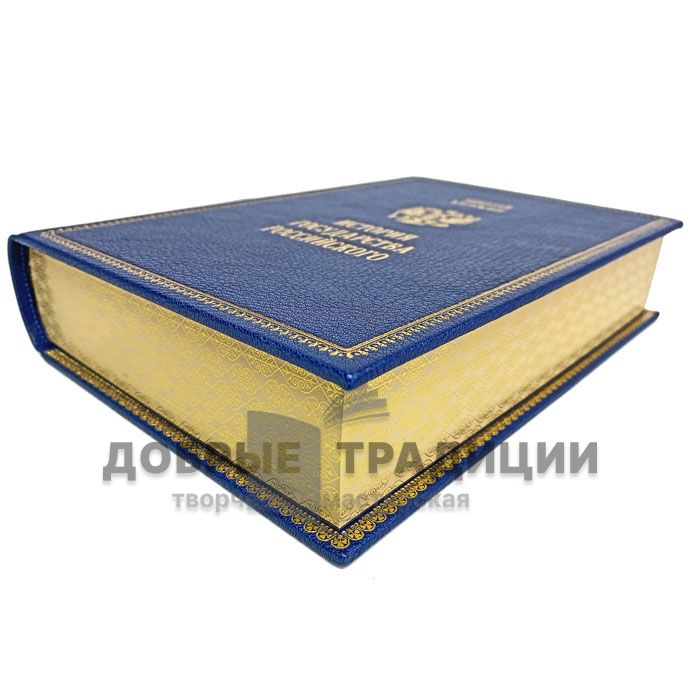
The size of the books - 170*240mm
Leather-French shagreen
paper - designer, with a cream tint
"The History of the Russian State" is a fundamental study written by the famous writer and historian N. M. Karamzin. love for the motherland, following the truth of history, the desire to understand the event from the inside - these are the principles that the author, according to him, was guided in his work. Created in the XIX century, this work is still of interest to both specialists and a wide range of readers.
Karamzin's interest in history began in the mid-1790s. He wrote a novel on a historical theme - "Marfa-Posadnitsa, or the Conquest of Novgorod" (published in 1803). in the same year, by decree of alexander i, he was appointed to the post of historiographer, and until the end of his life he was engaged in writing "the history of the russian state", practically ceasing to work as a journalist and writer.
In his work, Karamzin acted more as a writer than a historian-describing historical facts, he cared about the beauty of the language, least of all trying to draw any conclusions from the events described by him. Nevertheless, his comments are of high scientific value, which contain many extracts from manuscripts, most of which were first published by Karamzin. Some of these manuscripts no longer exist.
In 1816, he published the first eight volumes of the History of the Russian State, three thousand copies of which sold out within a month. In the following years, three more volumes of the History were published, and a number of translations into the most important European languages appeared. The tendentious monarchical coverage of the Russian historical process brought Karamzin closer to the court and the tsar, who settled him next to him in Tsarskoye Selo. The unfinished volume XII was published after his death.